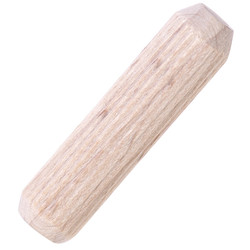
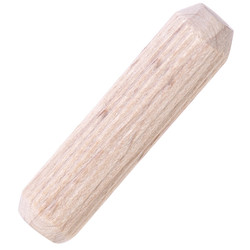
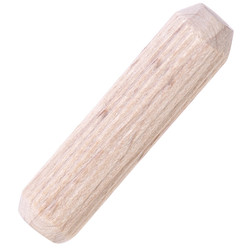
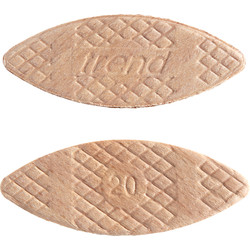
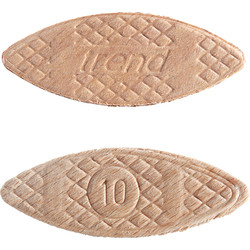
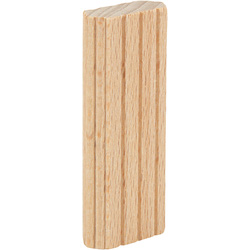
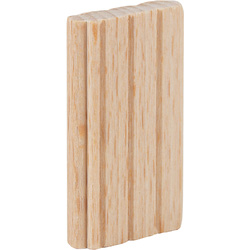
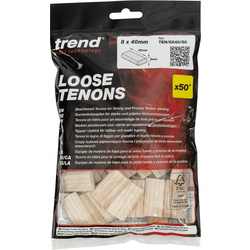
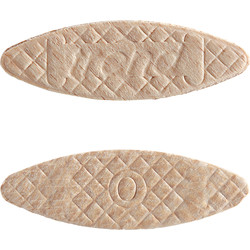
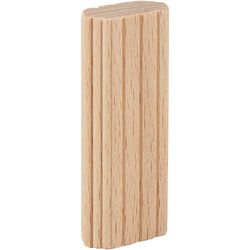
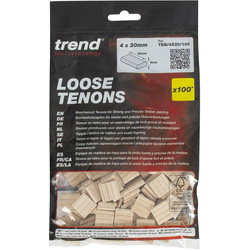
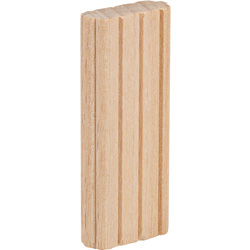
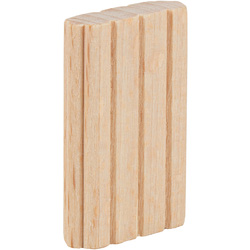
Wooden dowels and jointing biscuits are concealed timber fasteners designed to create strong, flush joints in hardwood, softwood, plywood, and MDF.
Cylindrical wooden dowels insert directly into pre-drilled holes - giving you a secure mechanical hold for cabinetry, flatpack construction, and furniture assembly. Meanwhile, compressed jointing biscuits slide seamlessly into slot-cut timber - absorbing wood glue to expand and lock your workpieces tightly together.
Once glued and clamped, these wooden fixings provide a structural joint often stronger than metal screws - allowing you to complete high-end joinery without visible fastener heads.
Available in standard trade sizes and manufactured by reliable brands like Trend, you can guarantee a precise fit for your next woodworking project.
Choosing the Right Dowel, Jointing Biscuit or Tenon
Consider these factors when selecting a dowel, jointing biscuit or loose tenon:
- Load & strength requirements - dowels and loose tenons handle shear better
- Alignment vs speed - biscuits are fast and self-aligning
- Material type - solid wood, plywood, MDF, veneered surfaces
- Joint thickness & depth - must leave wood around the joint
- Tooling / equipment - dowel jigs, biscuit joiners, mortisers
- Size & fit - choose correct diameter, length, slot width, and tenon thickness
- Material of dowels / biscuits - hardwood, fluted, composite
- Ease of repair / replacement
FAQs
What is a loose tenon, and when should I use it?
A loose tenon is a removable, shaped tenon (often rectangular) that fits into mortises cut in both wood parts. It offers stronger joint than biscuits, and more flexibility.
What size dowel or biscuit should I use for my wood project?
Choose diameter & length based on material thickness and joint area. For dowels, common sizes are 6 mm, 8 mm, 10 mm. For biscuits, No. 0, No. 10, No. 20 are common. Always leave enough wood around the join.
How long will a dowel / biscuit / loose tenon joint last?
With good glue, fit, and wood movement allowance, properly made joints last decades. Use proper adhesives, avoid stressing the joint, and control moisture.