- Ironmongery
- Door Locks & Security
Door Lock Jigs & Installation Kits
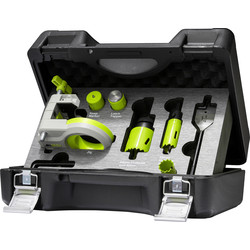
(1 product)Whether you are a professional carpenter hanging dozens of doors a week or a DIYer upgrading your home's hardware, a door lock jig is an essential time-saving tool. By clamping directly onto the door, an installation jig provides a precise, foolproof template for drilling out the latch hole and the handle spindle hole. This eliminates the need for manual measuring and marking, preventing costly mistakes on expensive timber doors.
We stock professional-grade systems like the Jigtech PRO Installation Kit. These kits typically include the self-centring clamp, specifically sized hole saws, and latch tappers required to fit tubular latches and door handles in a fraction of the standard time.
Fitting a Bathroom Thumb Turn Lock
Precision is critical when installing privacy hardware that must align perfectly on both sides of the door. A door lock jig is highly recommended when fitting a bathroom thumb turn lock.
Bathroom locks use a specific mechanism requiring a 5mm spindle to pass through the door, connecting the interior privacy thumb turn to the exterior coin-release safety slot. If these holes are misaligned by even a millimetre, the spindle will bind against the timber, making the lock stiff or prone to jamming. A jig guarantees dead-centre alignment so your thumb turn operates smoothly every time.
Frequently Asked Questions | FAQs
How does a door lock jig work?
A door lock jig clamps securely to the edge of your door and provides hardened guide holes. Instead of using a traditional spade bit or chisel, you use standard hole saws through these guides. One hole is drilled into the edge of the door for the latch, and another is drilled through the face of the door for the handle spindle. Because the jig dictates the spacing, the two intersecting holes align flawlessly.
Can I use a door lock jig for all types of locks?
Door lock jigs are primarily designed for installing tubular latches (for standard handles) and tubular deadbolts (for a bathroom thumb turn lock). They are generally not used for routing out the large rectangular cavities required for deep mortice sashlocks or 5-lever deadlocks, which typically require a specialized mortice jig and a plunge router.
Why is my bathroom thumb turn lock sticking?
If a bathroom thumb turn lock is difficult to turn, it is almost always an alignment issue. The holes drilled through the face of the door are likely slightly off-centre from the latch mechanism inside the door, causing the connecting spindle to rub against the wood or the metal casing. Using a door lock jig during installation prevents this by guaranteeing accurate cross-bore alignment.