

- Help & Advice
- How To Guides
- How to Reset a Boiler
How to Reset a Boiler After a Power Cut
If your boiler has stopped working and you need heat and hot water back quickly, you’ll probably need to reset it. Most boilers can be reset by finding the reset button and holding it down for about 10 seconds or so, although the exact process depends on the specific model of your boiler. This simple fix tends to solve minor issues like a brief power cut or a one-off fault.
However, before you press that reset button, it’s important to understand why your boiler has shut down in the first place. Common reasons include low water pressure, overheating or ignition problems, and resetting without knowing the cause might only give you a temporary fix.
In this guide, we’ll run through the entire process of resetting a boiler yourself so you can get your heating system back up and running again. We’ll also highlight when a simple reset might not solve the problem and when it’s best to call a qualified engineer.
Common Causes of Why Your Boiler Needs Resetting
Boilers tend to lock out as a safety feature when their sensors detect problems with operation. Power cuts, low water pressure, and faulty components can all trigger these automatic shutdowns that require manual intervention to restart. Let’s consider some common causes of why your boiler may have shut down in the first place.
Power Cuts
Power cuts are one of the most frequent reasons that your boiler stops working. When electricity supply is suddenly interrupted many boilers need a manual reset once power has returned, this is because the system doesn’t automatically restart on its own.
Low Water Pressure
Lower water pressure can cause your boiler to shutdown for safety. Your heating system relies on adequate pressure in order to circulate water properly. If pressure drops below 1 bar, the boiler detects this and locks out, usually with an accompanying error message.
Ignition Failure
Ignition failures happen when the boiler can’t light its burner. This could occur due to problems with the gas supply, a faulty electrode, or issues with the ignition lead. The boiler won’t risk operating without proper ignition.
Overheating
A boiler that’s overheating triggers an automatic shutdown, again for safety reasons. When the internal temperature exceeds safe levels, the system cuts out to prevent damage. This can often point to circulation problems or a faulty thermostat.
Frozen Condensate Pipes
Frozen condensate pipes block the drainage system during very cold weather. The pipe carries waste water away from the boiler. When it freezes, the boiler cannot function properly and locks out until you thaw the pipe.
Understanding Boiler Error Codes
You may notice that when your boiler encounters a fault, an alphanumeric code is displayed. These codes are not uniform and differ depending on your boiler brand. For example, at the time of writing, Worcester Bosch boilers use codes like EA, which indicate a failure to ignite while Vaillant boilers use F codes and Ideal boilers use L or F codes.
Each code points to a specific problem. Some codes highlight simple issues that you can fix yourself, like low pressure. Whereas others signal more serious problems that need a Gas Safe engineer. It’s important to check your boiler manual as this will contain a full list of codes relevant to your specific model.
Common codes worth remembering include pressure-related errors, ignition failures, and overheating warnings. Be sure to write down any code before attempting to carry out a reset. If the same code reappears after resetting, you’ll need help from a professional.
When a Boiler Should be Reset
You should reset your boiler after a power cut once the electricity has returned. This is normal and doesn’t indicate any underlying boiler or system issues. A single lockout that doesn’t repeat is usually safe to reset. If your boiler runs as it should after the reset, the issue was likely temporary. Check the pressure gauge and top up if needed before you carry out the reset.
If it keeps locking out, don’t repeatedly reset your boiler, as this signals a genuine fault that requires investigation. By constantly resetting your boiler you could be masking serious underlying problems and may damage components.
If you spot any water leaks, hear unusual sounds or smell gas then your boiler will require immediate attention from a qualified engineer. It’s important never to ignore warning signs!
Step 1: Check the Boiler Manual
Before starting it’s important to check your boiler manual as this will contain specific instructions on how to reset it. Different manufacturers use different reset methods, and what works for one brand might not apply to yours. It’ll also show you where the reset button is located and explain any warning lights and error codes shown on the display.
Step 2: Check the Boiler Pressure
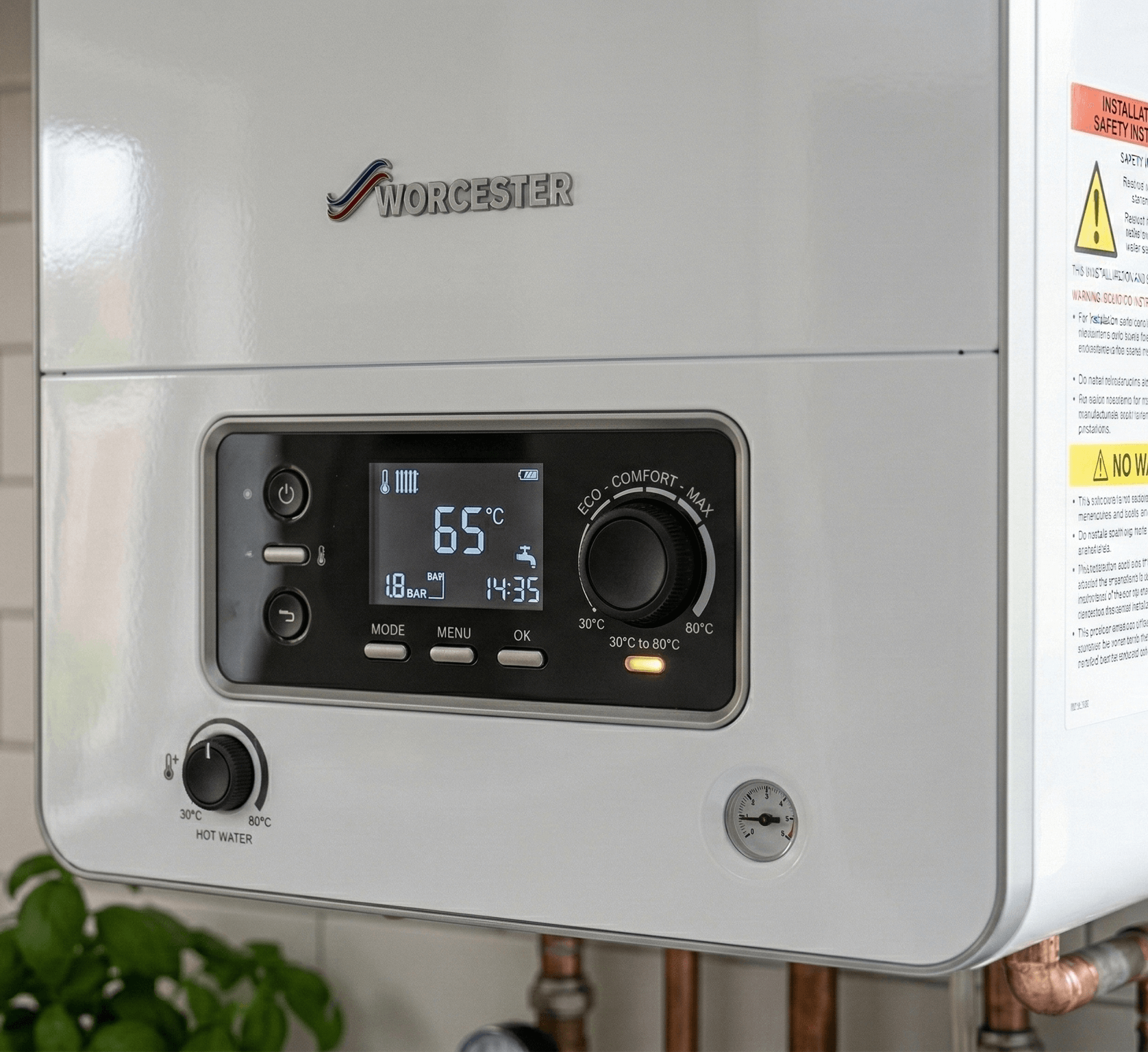
It’s worth noting that the boiler won’t reset properly if the pressure is set too low or too high so be sure to check the pressure on the gauge - it should read between 1 and 1.5 bar when the system is cold. If the pressure is below 1 bar, then you’ll need to repressurise the boiler first. If the pressure exceeds 2 bar you’ll need to bleed a radiator first to release any excess water.
Step 3: Identify the Reset Button
The location of the reset button varies by manufacturer and model. Most modern boilers have a clearly marked reset button on the front panel, often coloured red, black, or orange. Here are a few brands and their common reset button locations:
-
Worcester Bosch: Typically on the front panel, marked with a flame symbol.
-
Vaillant: Usually beneath the display screen.
-
Baxi: Often on the right hand side of the control panel.
-
Ideal: Generally on the lower front panel.
Older boilers sometimes have a dial instead of a button. You’ll need to turn the dial to the reset position and hold it there for a few seconds. The boiler manual will show you the exact position for your specific model.
Check for LED indicators or a digital display that shows error codes. These will help you understand why your boiler locked out in the first place.
Step 4: Press the Reset Button
Once you know where the reset button is and you’ve ruled out any obvious problems like error codes on the display panel you can then proceed to the actual reset.
Press and hold the reset button for around 3 to 10 seconds. Some boilers only need a quick press whereas others need you to hold the button until you hear a click or see the display panel change. The exact durations depends on your boiler.
Step 5: Check the Reignition Process
After pressing the reset button, your boiler should begin its startup sequence. You’ll typically hear clicking sounds as the ignition system attempts to light the gas. This process usually takes anywhere from 30 to 60 seconds.
Watch the boiler display during this time. Most modern boilers show status messages or codes that indicate what’s happening. The flame symbol should appear on the display once ignition succeeds.
Listen for the burner to fire up. You should hear a low whooshing sound as the gas ignites and the boiler begins heating water. The boiler may also show the current water temperature or pressure reading. If the ignition fails, the boiler will lockout again. Don’t attempt another reset straight away. Instead wait for around 5 minutes before having another go, and never reset more than twice without professional help.
Step 6: Verify Heating and Hot Water Function
Once the boiler has successfully reset and reignited, you need to check that everything works as it should. Turn your hearing on at the thermostat or programmer and wait around 15 minutes. Feel the radiators in different rooms. They should be starting to warm up from the bottom. If radiators remain cold this could indicate other issues, like air in the system.
Next, test the hot water by running a tap for a few minutes. The water should reach a comfortable temperature. Modern combi boilers heat water on demand, so you should notice hot water almost immediately.
-
Check the following indicators:
-
Boiler display shows normal operating temperature.
-
No error codes appear.
-
Boiler pressure gauge reads between 1 and 2 bar.
-
No unusual noises or smells.
When to Call Out a Gas Safe Engineer
-
The boiler cuts out repeatedly after resetting.
-
You smell gas near the boiler.
-
Error codes appear that your manual lists as requiring a professional service.
-
The boiler makes loud noises.
-
You’re unsure about any part of the reset process.
Never ignore persistent lockouts. They’re safety features designed to protect you and your home from potentially dangerous faults.